RMSI partnered with the Rebuild Kerala Initiative (RKI), Government of Kerala to develop a first-of-its-kind, multi-hazard NatCat-based Disaster Risk Financing and Insurance (DRFI) Strategy for the State. Working with the RKI, Kerala State Disaster Management Authority (KSDMA) and multiple State departments, alongside KfW (Germany), IFC, and the World Bank, RMSI developed the State’s catastrophe risk profile and designed a multi-layered DRFI framework to help Kerala prepare for, and respond more quickly to, natural disasters. The strategy sets a benchmark for climate-resilient financial planning in India.
The Challenge
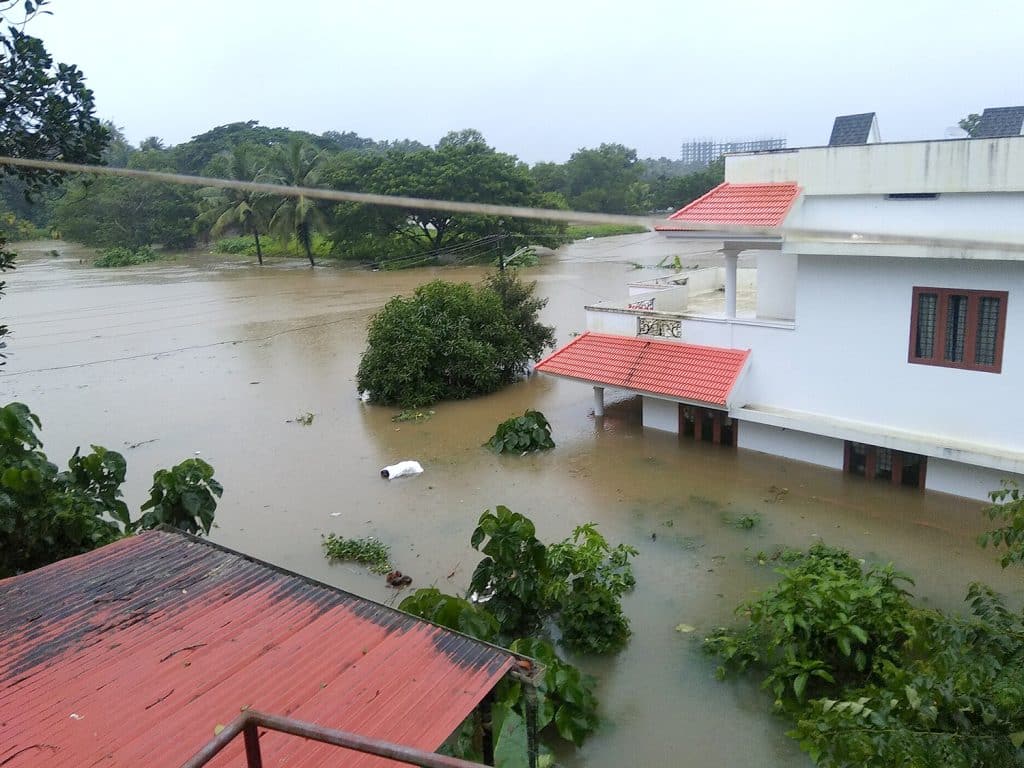
Kerala is one of India’s most hazard-prone states. Recurrent floods, landslides, cyclones, and extreme rainfall have caused significant socio-economic losses over the past decades. To protect public finances and vulnerable communities, the State needed to:
– Quantify its catastrophe risk across multiple hazards at State, district, and Local Self Government (LSG) level
– Base disaster risk investment decisions and priorities on robust, evidence-based loss estimates
– Establish an institutional mechanism to mobilise financial resources rapidly after a disaster
– Align multiple State departments and international development partners around a multi-layered DRFI strategy
The Solution
RMSI combined advanced catastrophe modeling with financial and institutional design to deliver an integrated DRFI strategy:
Catastrophe risk profiling: Developed a comprehensive Kerala State Catastrophic Risk Profile integrating hazard, exposure, and vulnerability data
Loss estimation: Estimated Average Annual Loss (AAL) and Probable Maximum Loss (PML) at State, district, and LSG level to support prioritisation of investments
Multi-layered DRFI framework: Designed a Disaster Risk Financing and Insurance (DRFI) framework combining budgetary instruments, catastrophe reserves, and risk transfer solutions
State Disaster Risk Pool (SDRP): Proposed a structured institutional mechanism to mobilise financial resources for rapid disaster response
Parametric insurance: Developed prototype parametric insurance products for floods, landslides, and cyclones, enabling faster payouts based on predefined triggers
Stakeholder coordination: Managed complex engagement with the Rebuild Kerala Initiative, KSDMA, KfW, IFC, the World Bank, and multiple State departments, delivering all technical outputs and receiving an excellent project completion certificate in June 2025
The Impact
All key recommendations were approved by the Kerala Cabinet for implementation. As noted by the Government of Kerala:
“Acting on these recommendations, the Cabinet approved a comprehensive group insurance framework combining parametric insurance and indemnity insurance for BPL families.”
This recognition highlights RMSI’s contribution to building Kerala’s financial resilience against natural catastrophes. The first-of-its-kind study also offers a data-driven, scalable model that other Indian states can adopt to strengthen their own disaster risk financing.