Welcome

This blog is a repository of articles from RMSI's industry recognized thought leaders sharing their global experiences. RMSI is a leading global geospatial data and software solution provider. Our innovative solutions help in addressing global issues of human habitation, food security & safety, natural calamities, use of natural resources, utilities, transportation & infrastructure.
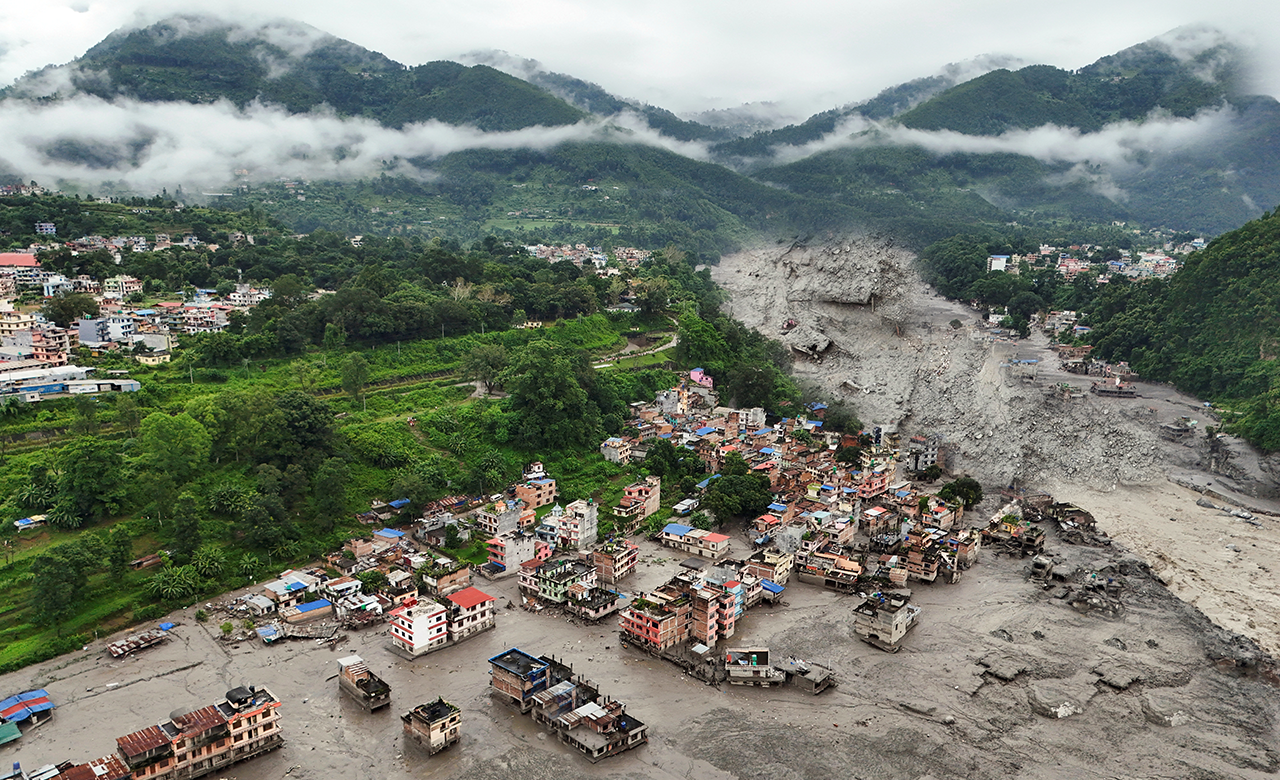

Nepal Reels Under Unprecedented Catastrophic Disaster Due to Rock-Ice Avalanche in the China-Nepal Border Region: A Stark Reminder That Global Warming Is Altering the Stability of Mountain Climate

By Dr. Murari Lal, Published on: 3rd September 2026

Nepal’s avalanche due to massive rock landslide with a entrained small section of glacier ice between the peaks of Langtang Lirung (7,227 meters) and Tsangbu Ri (6,781 meters) was caused by the collapse on the morning of 26th August 2026. The piled up debris tumbled down vertically below 1200 m […]

Read More...

AI-Ready Telecom Networks Start with Trusted Network Data

By Ravi Shankar, Published on: 1st September 2026

Telecom operators are rapidly adopting AI across network planning, operations, assurance, and customer experience. But how well any of this works comes down to something more fundamental: does the AI have access to a trustworthy digital picture of the network? Network information tends to be spread across GIS, inventory, engineering, […]

Read More...

From Drought to Deluge – Understanding Mumbai’s Monsoon Whiplash

By Dr. Pratap Singh and Shubhi Gupta, Published on: 15th July 2026

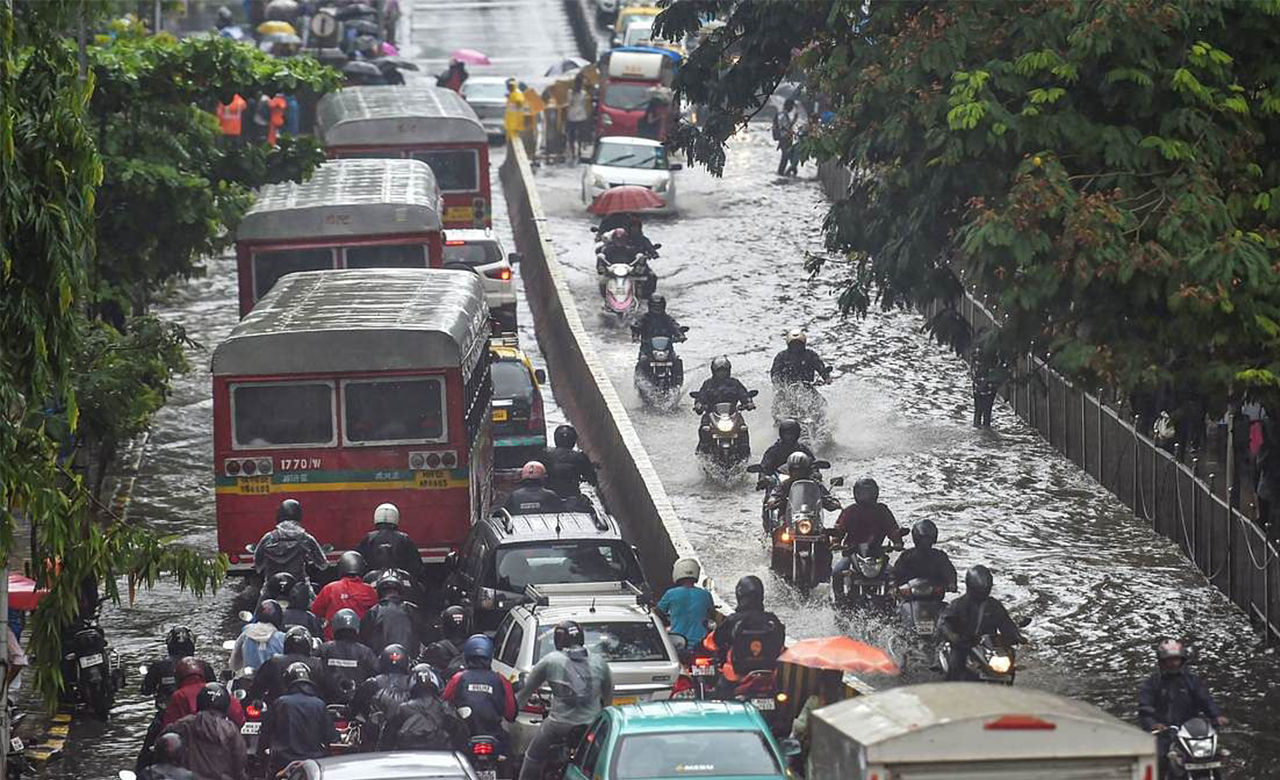
Barely a week after Mumbai recording its worst condition of water availability in reservoirs in years, grappling with a delayed and patchy monsoon onset, now the city has swung to the opposite extreme, with leaving entire Mumbai underwater. In the first week of July 2026, city experienced some of the […]

Read More...

What Mumbai’s 2026 Water Crisis Means for Climate Resilience

By Dr. Pratap Singh and Shubhi Gupta, Published on: 2nd July 2026

With Mumbai’s reservoirs at less than 9% capacity, a 46% national rainfall deficit, and five monsoon-suppressing atmospheric factors converging simultaneously, India’s 2026 monsoon crisis is a stress test of urban and industrial climate resilience — in real time.  India is recording its most severe June rainfall deficit in over 146 […]

Read More...

Leading the Way in GeoAI: Why RMSI is a ‘Star Company’ in Geospatial Intelligence

By Nitu Sharma, Published on: 10th June 2026

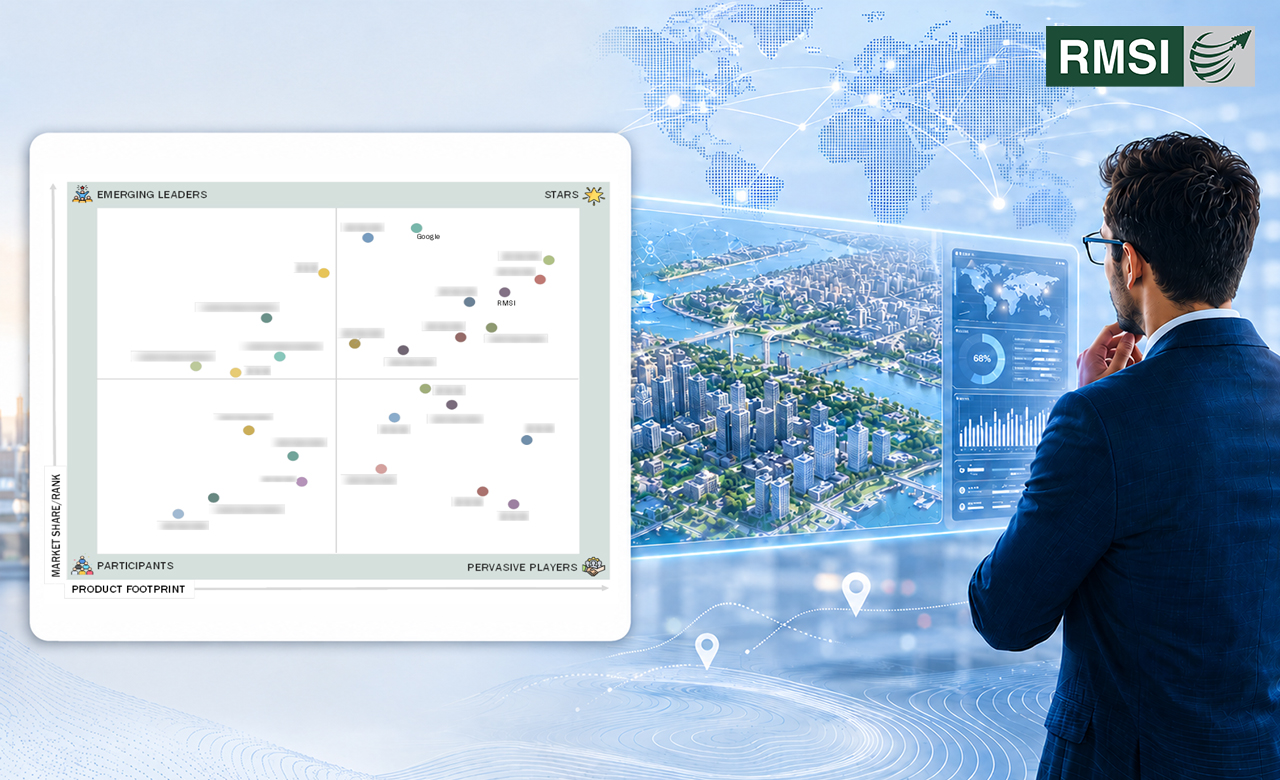
In today’s rapidly evolving digital landscape, geospatial data has become the backbone of modern business strategy. Location intelligence is no longer just about maps – it’s about predicting the future, visualising real-world infrastructure, and making safer, cost-effective decisions. Proving our leadership in this exciting space, RMSI has been recognised as […]

Read More...

Why High-Quality 2D and 3D Training Data Is Critical for AI at Scale

By Raghubabu Challagulla, Published on: 14th April 2026

As Artificial Intelligence continues to power decision-making across industries, one factor consistently determines its success- the quality of training data. From geospatial intelligence and infrastructure monitoring to agriculture and autonomous systems, AI models rely heavily on how accurately the real world is represented in their training datasets. At the core […]

Read More...

Why Field Data Accuracy Is Critical for Scalable Telecom Network Operations

By Ravi Shankar, Published on: 11th March 2026

Telecom networks are expanding at an unprecedented pace. From fiber rollouts and 5G densification to network modernization and capacity upgrades, operators are under constant pressure to scale faster—without compromising service quality, compliance, or cost efficiency. At the center of this challenge lies one foundational requirement: accurate field data. Field data […]

Read More...

Building Resilient Utility Networks Amid Climate Risk, Load Growth, and Regulatory Change

By Pushpendra Johari, Published on: 18th February 2026

Utility leaders today are operating in an environment defined by compounding pressures.   Utilities are navigating a “super-cycle” of compounding pressures that lead to a transformation change from a traditional, predictable operating model to a more resilient Grid. Climate volatility is increasing the frequency and severity of disruptions. Load growth driven by electrification, urban expansion, Data centers for AI, Electric Vehicle adoption, and distributed […]

Read More...

Key Outcomes from COP30 in Belem, Brazil

By Dr. Murari Lal, Published on: 18th December 2025

Climate Change remains the epitome of all global challenges facing the world today but climate negotiations are fogged by uncertainty, protests, disillusionment with the multilateral system, dishonour of finance and technology commitments by developed countries and a rapidly declining carbon budget. The Conference of Parties-30 (COP30) to the United Nations […]

Read More...

Future-Proofing Fiber Networks with GIS: A Leadership View from Fiber Connect 2025

By Jon Owen, Published on: 17th June 2025

Attending the Fiber Broadband Association’s Fiber Connect 2025, held from June 1-4 in Nashville, Tennessee, was an eye-opening experience, surrounded by over 5,000 broadband professionals united to shape the future of fiber optic connectivity. The vibrant discussions, workshops, and posts on professional and industry platforms underscored a clear theme: Geographic […]

Read More...